GEM SERIES: Insights on SOUL-GEM Selection [Part II]


Rule # TWO

Do not undermine the basics.

It is all in the ‘energy’.

Precision precedes potency

The nine precious gems are Ruby (Manik) for Sun, Pearl (Moti) for Moon (Chandra), Red Coral (Moonga) for Mars (Mangal), Emerald (Panna) for Mercury (Buddha), Yellow Sapphire (Pukhraj) for Jupiter (Guru), Diamond (Heera) or White Sapphire (Safed Pukhraj) for Venus (Shukra), Blue Sapphire (Neelam) for Saturn (Shani), Hessonite Garnet (Gomed) for North Node of Moon (Rahu), and Cat’s Eye (Lehsunia) for South Node of Moon (Ketu). An understanding of basic elements and representations of all planets is necessary for gem analysis, such as Fire, Earth, Air, and Water, Benefic vs. Malefic, and Exaltation and Debilitation of planets with respect to sign placements. Whether a native can wear two gems simultaneously would depend upon the natural and functional (chart-specific) friendship or animosity (External Link: http://www.astrologykrs.com/functionalmaleficandbenefic.html) among the respective planets that such gems represent.

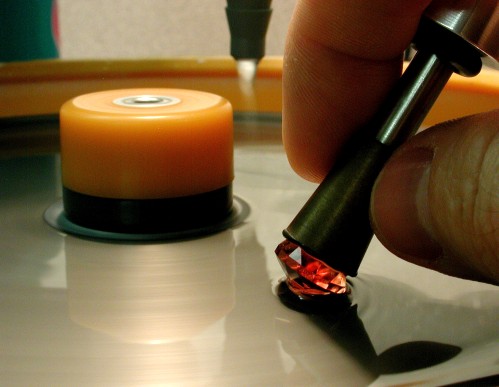
Figure 1 Source: http://gemstoneartist.com/gemstone-articles/how-gems-are-cut/

Similarly, planets determine which gem should occupy which finger and the placement and strength of a gem in the birth chart determines whether the native must wear it in left hand or the right one. There are various approaches in this regard such as the reverse pairing of solar vs. lunar limb and gems of respective natures. Another popular technique is to wear the potentially malefic gem as per the birth chart, or in its testing phase, in the left hand only. Mastery of these techniques comes with long-term real-life experience and with the deployment of (Karma) Desh (culture and location), Kaala (time and age), Patra (the native himself and his personal attributes) rule. The rule states that for each astrological interpretation and gem analysis, the astrologer must consider these three traits and based on these, they must decide which principles to apply and which to rule out. This is where the elements, energy and reverse engineering come into play and it renders astrological interpretations their constituent of ‘art’.

Figure 2 Source: http://wassermanjewelgalleries.com/wp-content/uploads/2017/01/January-repair02-770×350.jpg

Suppose the native has their third Saturn Return in effect. One would be wise to exercise common knowledge with interpretation and before any recommendations because most definitely the native is elderly, the results would differ from first Saturn Return. Likewise, an experienced astrologer must crosscheck and refrain from recommending strong or potentially malefic gemstones to natives that exhibit sure signs of aggression. I have seen veteran astrologers reverse engineer and reconcile calculations based on observations of Desh, Kaala and Patra. Remember; better a weaker dose than the wrong one. Unless multiple systems have confirmed the accuracy, begin with testing the weaker gems even if the clients insist on potency. It is a very common practice in India to keep Blue Sapphire (External Link: https://www.speakingtree.in/allslides/how-to-check-if-blue-sapphire-suits-you/what-to-expect-if-the-blue-sapphire-does-not-suit-you) under pillow for 3 nights or to tie it on arm in thick cloth for 3 days before actually putting it on. This is to ‘test’ with the quality of dreams or the incidents that follow during this testing period, and make sure the gem suits the bearer. Blue Sapphire is a gem with the properties of Saturn; a tremendously powerful gem that can yield very strong results.

With precious gem recommendations, potency follows precision.

Only BRIEF introductory consultations on some Tuesdays* on Whatsapp and Viber +1 204-557-2974. Send your Date, Time, and Place of Birth. Note: This initiative is only for those who may not afford full readings at this time. (*based on our availability and resources)

Being Gem Aware (Introduction)


Method to the madness

Although selection must and testing must be left to the experts and laboratories, it is good to be aware of different types of gems, their characteristics, background and how they are graded, evaluated and so on. NJ’s series of articles will deal with further insights on soul-gem selection in detail but here is a brief introduction for those that are new on the blog.

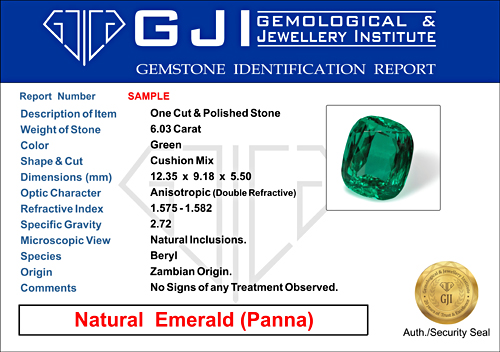
Image Source: Shubhgems.in

The first step is to shortlist one’s favorable gem through proper calculations based on the principles of Jyotisha Shastra (science of energy and opportune time). This is a rigorous process involving numerous paddhyatis or systems. Typically, over a dozen different aspects of Jyotisha need to be referred to in order to get an idea of ideal gem that the planetary placements consent to. Once the gem has been shortlisted, the suitability of gem must be verified using a low potency gem of

that kind. Even though it is a sample, technically, this should not be a substitute or artificial stone. For testing too, the gem has to be natural. Slightly heated or treated gems are acceptable only for verification purposes but not for permanent or long-term use.

It is a common practice in India, for instance, to test Blue Sapphire by putting in under the pillow or by tying it in thick cloth on arm for first three days and observing the dreams an

d how one generally feels. This testing period can be extended to 21 days based approval from the analysis. In this duration, one generally notices significant events and a better state of consciousness. Native must discuss with an experienced astrologer after 21 days before upgrading to higher potency or grade.

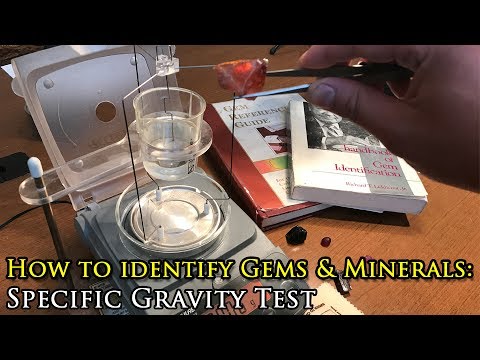
Image Source: i.ytimg.com

Once the compatibility has been confirmed, then comes determining the opportune time of ‘accepting’ or putting it on. One method is to do this on day & time of occurrence of one’s birth Nakshatra (the lunar mansion in which native’s moon was placed at the time of birth). This could mean waiting for up to 27 days before the time is opportune. Everything has a scientific logic behind it, including which metal ring goes with a particular gem, the correct arm and finger assigned to all gems and so on.

Four C’s of Gems

The most important and often overlooked C of a gem is its Cask-life. In case of gems, the age (before cutting and polishing) adds to their potency. As long as it is a natural gem, the four C’s follow its age, in the following sequence:

Clarity

As a thumb rule, gems with very few or no inclusions are the most expensive ones. The clearer the gem, the more valuable. Yet, only laboratory-based tests can set the ones with no inclusions apart from glass or artificially created dummies. Even the most experienced gemologists sometimes find it impossible to guarantee a true gem without using scientific apparatus. There are several parameters such as refractive index, specific gravity, hardness, density, composition and so on.

Color

The more steadily spread and intense the color, more the desirability. Tone, saturation and hue of precious gems determine their value to a great extent. The tone can be deep, dark or rich; the saturation would show its purity, intensity and brightness and the hue refers to the type of shade it carries.

Image Source: wikimedia.org

Carats

Assuming that the clarity and color both are passable, the weight of gems preferably in carats, as opposed to astrological measure / scale of Ratti’s, matters a lot. Astrologically, the weight of a gem has to correlate with the age and weight of the native wearing the gem. There is some controversy on whether it is the weight of the person, or the age, that determines the ideal weight of the gem. However, experienced astrologers never take one factor in consideration alone when deciding upon the carats. In addition, density and weight of a gem are more crucial than its size.

Cut

To take the best advantage of a potent gem, the cut has to be fine because it adds to a gem’s value and beauty. The secret is that the cut has to be specific to the native. In transiting lunar mansions, gems are massaged, and a suitable cut enhances the recall and reception of a gem in this process.

GEM SERIES: Insights on SOUL-GEM Selection [Part 0]


Rule # ZERO

All systems of Vedic astrology must agree to prescribe any native the same SOUL GEM.

If this does not happen, the calculation is flawed.

If this does, nothing outshines the magic.

~ NJ: The Jewel Whisperer

Introduction

Purpose of this post series is to provide right direction to beginners in Vedic astrology (Jyotisha Shastra) and aspirants of healing with Precious Gemstones (Nav-ratna, Rashi-ratna, Mani and Gem Therapy). Key to great interpretations and perfect gem selection is to crosscheck the results through hit and trial using multiple systems of ancient Indian astrology. When practiced perseveringly with pre-rectified data such as Ayanamsa (Precision of Equinox), time of birth and so on, the results are surprisingly accurate. With correct approach, one can tap into the power of gems and use it for one’s overall well-being. In this series, we will take into account various systems of astrology, as and when applicable, to better understand how to determine the most suitable gem for any given birth chart.

Figure 1 Source: Images5.aplus.com

In general, gems are mineral crystals found in raw form (known as Rough) at great depths and formed in long time under extreme temperature and pressure. Some gems can be organic though, such as pearls and corals found underwater. Formed exquisitely under such complex and rare circumstances, they also possess unique characteristics such as composition, clarity, hardness, refractive index and specific gravity. Gems can be tested and identified for their authenticity based on physical, chemical and optical properties in laboratories all around the world. Some gems take over 150 million years to form, and across civilizations and cultures, humans have struggled for thousands of years to find such valuable deposits of gems. The prices attached to gemstones are not just for the material itself, but also for the immense amount of hard work that goes into locating it and bringing it to its finished form. In terms of functionality, there can be no comparison between the nine precious gems and any other semi-precious stones.

According to Nakshatra Jyotisa, everything in the universe is a being, on an endless journey of its own. Everything is perfect and has a reason for being the way it is. If it were not, if would not have survived and existed. Just as Moon’s South Node shows where a native is coming from, the North Node reflects where he or she is destined to be. Everything is balancing itself through its own karmic account. If so, then why gems as a remedy and a remedy to what?  Life follows its karmic course and those who practice astrology can clearly see that during interpretations. If that is the case, the only thing one must do to be in harmony, is to take all measures to dilute the illusion of ‘I’. ‘I’ did such, and so such is the result; this is an illusion.

Figure 2 Source: static4.businessinsider.com

What gems do is that they intensify the karmic effects and pacify the illusion of self, and hence, they magnify harmony with nature. In order to categorize and locate patterns, in Jyotisha Shastra, everything has a representation according to its basic element. Planets too have elements assigned to them, like everything else. Moreover, they are the most solid benchmarks to relate to ‘time’. Similarly, within practical reach of us humans gems are the most intense substances due to their almost timeless life cycle and properties. It will not be an exaggeration to say that the nine precious (natural) gemstones are, in a way, tiny clones or remains of the seven physical planets and energy repeaters of the two virtual planets. When harnessed properly, their energies can very well alter our state of mind and state of being.

Jyotisha Shastra: A Scientific Subject


Astrology, (henceforth referred to as Nakshatra Jyotisa, Jyotisha or Vedic Jyotisha Shastra, meaning the study of light and time), is absolute science while astrological interpretation is art. The first rule of understanding Jyotisha thoroughly: the learner must experience it, apply it and experiment with it. Jyotisha is about acknowledging and understanding the universal automation and recognizing that everything is on its definite path. The purpose of Jyotisha is not to predict the future, but to facilitate it, by providing a deeper understanding of ‘the real show’ that goes on backstage.
This article aims at providing the reader with at least one simple tool to feel the precision of Nakshatra Jyotisa system of Vedic astrology based on 27 Nakshatras (lunar mansions; 4 phases of each = total 108 unique zones). Most people that discard astrology do not have the appropriate apparatuses to experiment with or they have little experience learning it systematically, under supervision. Hence, they typically end up confusing a wrong set of interpretations with the system itself. Here are a few basic questions to begin with. First, would it not be logical to assume that everything has a correlation of some kind, known or unknown, to what that thing surrounds and is surrounded with? If yes, then likelihood of understanding such correlation with time, practice and experimentation should only be scientific. Second, what other event imaginable might have a higher possibility of occurrence than this one, “the Sun will rise from the east direction in the morning, precisely at the time that could very well be calculated and predicted for any given day in the future”. Third, in both scale and rationale, the interaction of human brain with cosmic nervous system is no different from the neurons inside the brain interacting with each other, across synaptic cleft. The point is that planets serve as concrete benchmarks for in-depth study of time and variation. Jyotisha Shastra, hence, is not groundless but only scientific.

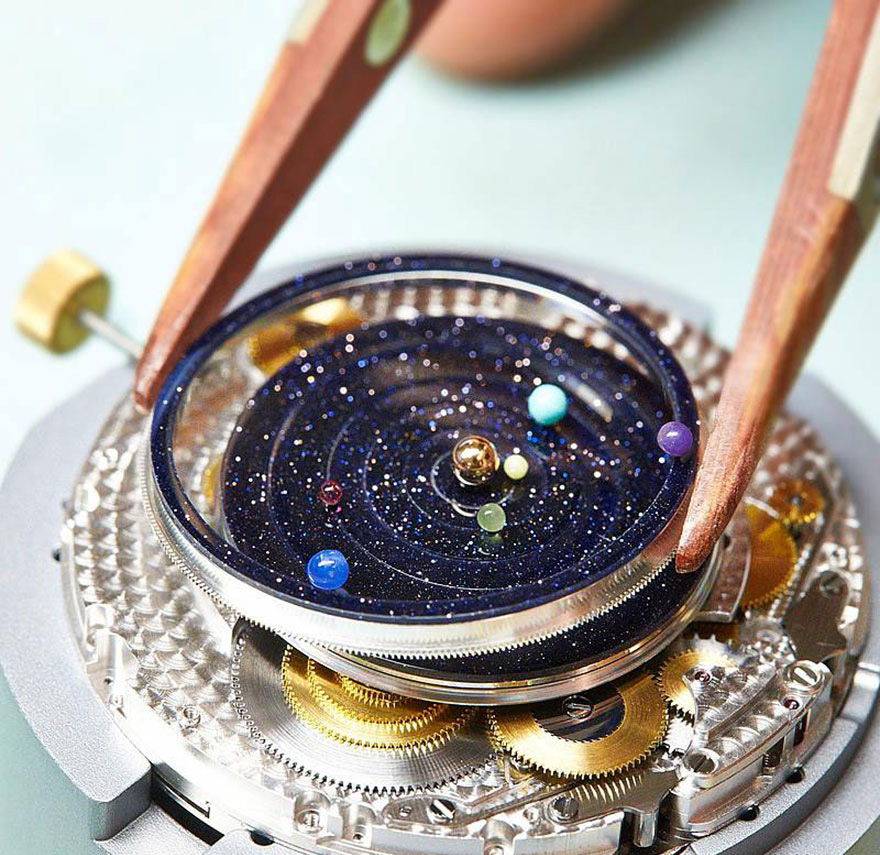
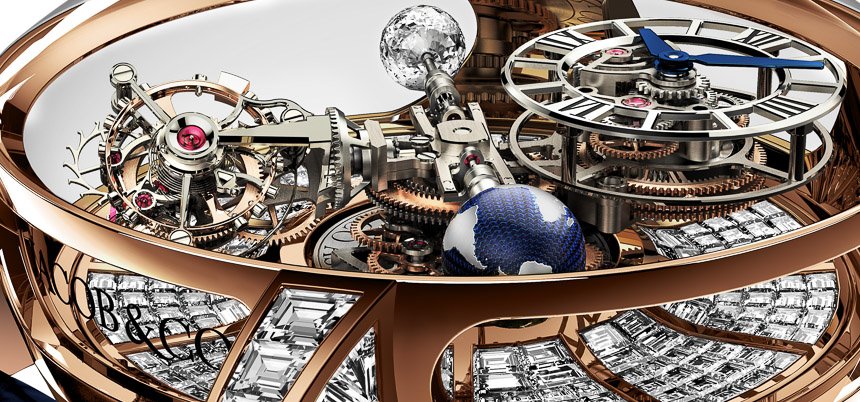
To have a bird’s eye view of Vedic Jyotisha Shastra, one may imagine an endlessly large clockwork with complex and sophisticated wind-up mechanism and a perfect series of pulleys, cogwheels, and coils and gears. In this clockwork, every pulley has its unique function, all cogwheels are interconnected and every gear is indispensable. To appreciate this model wholly one must assign all things imaginable to these gears, preferably in the order of their physical or metaphysical mass, significance or size. Such cosmic clockwork would include every being and thing, both living and so-called non-living; and all forces, feelings, phenomena and events, so on and so forth. Although the configuration of such a setup would be highly dynamic but it would totally be possible to correlate the movement of bigger gears with the smaller ones and vice-versa, as well as the events associated with them. Nakshatra Jyotisa is the sophisticated science of analyzing the universe with such a perspective. The gears are virtual, yet mechanical, and their movement is scientific; but a large part of what they represent is abstract and hence interpretation is a skill that requires practice and experience to master.



Two key characteristics that set Nakshatra Jyotisa apart from the western astrological systems are; first, the precision and rectification of equinoxes (Ayanamsa), and second, a high number of divisions, sub-division, cycles and sub-cycles. Critics often attack astrology with the claim that it relies on the archaic locations of heavenly bodies that are different today from what they used to be 2000 years ago. Though they are true about the western astrology over this fact, it does not apply to Nakshatra Jyotisa. Calculations of Nakshatra Jyotisa and Vedic Jyotisha Shastra take in consideration this rectification part with an astonishing precision. A simple test any nonprofessional could perform today is by locating the true, real-time position of a constellation or a planet using Mobile Apps like Sky Map. When validated with the positions mentioned in Vedic Planetary Ephemeris for that particular date and time, these positions match precisely to the degree, minutes and seconds. The intricacy of astrological calculations in Vedic Jyotisha Shastra is far more exquisite compared to all other similar systems. For example, Nakshatra Jyotisa uses 27 Nakshatras or lunar mansions, each consisting of four phases, totaling 108 zones as compared to 12 zodiac signs of western astrology. While evaluating timing of events, there are numerous sub-divisions within divisions and sub-sub-divisions within sub-divisions of Dashas (planetary periods or categorized time fragments). In western astrology, there is no corresponding or even functionally comparable system. Similarly, western astrology uses only one birth chart while Vedic Jyotisha Shastra employs 60 Divisional Charts and numerous other aspects and sub-systems. Essentially, the idea is to divide 360 degrees of sky among all 27 lunar mansions, which have four phases (pada) each. A single phase consists of three degrees and twenty minutes (3°20′); degrees, minutes and seconds are the units used to measure planetary movements.

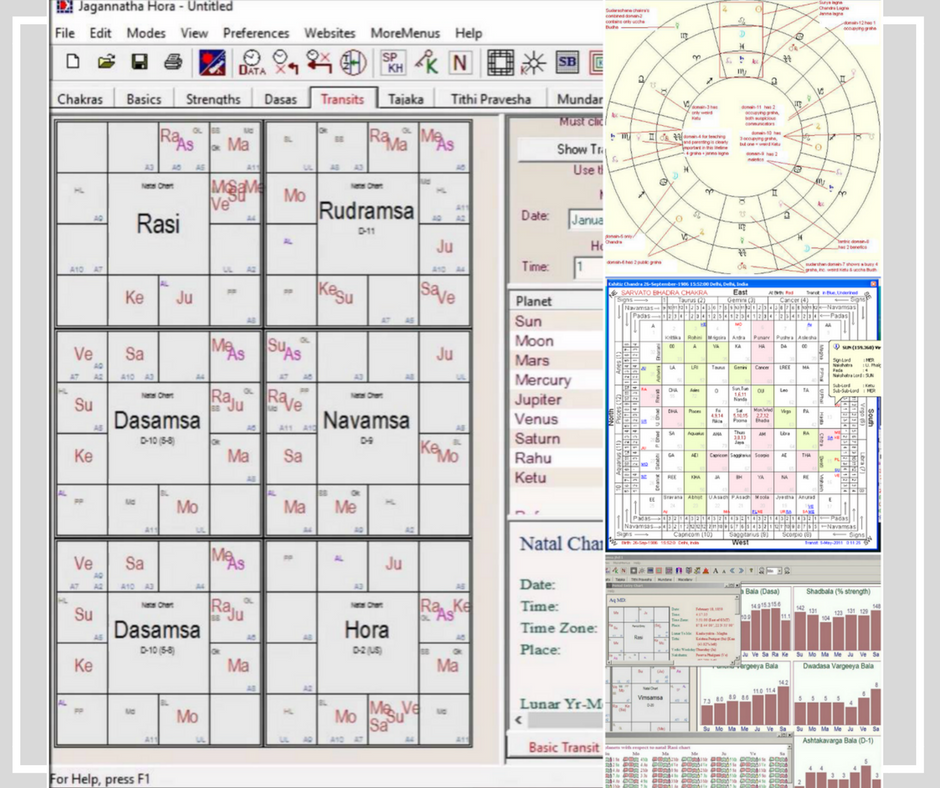
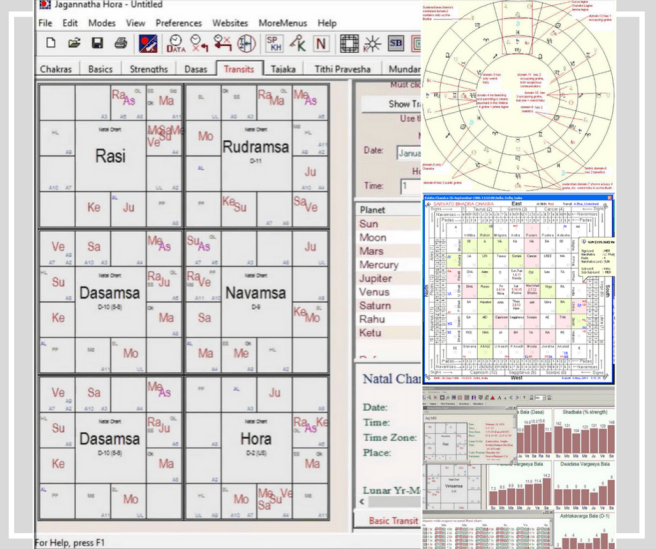
With this approach, an individual zodiac sign now has nine unique shades, to begin with, that will provide incredible information when used with rectified true sidereal ecliptic coordinates (real size and location of the constellations in the sky, same as the one used by astronomers worldwide today). Softwares such as Jagannath Hora (download free from http://www.vedicastrologer.org/jh/) can provide several relevant insights.


To get first-hand experience, here is the method to easily calculate the Nakshatra (lunar mansion) of a native (meaning the person in question whose birth chart is being cast), and some resources through which to find out the meaning behind that Nakshatra. Natives can ascertain their respective Nakshatras and the corresponding Phase (a number between 1 and 4) by entering their exact date, time and place of birth on Prokerela Nakshatra Finder: http://www.prokerala.com/astrology/nakshatra-finder/. Suppose, the Nakshatra that shows up is Uttra Bhadrapada (Pada 4 or Phase 4), natives can then find further information (as follows) regarding this Nakshatra by querying www.BarbaraPijan.com with the name and phase of their Nakshatra. They can also get the relevant keywords by visiting the table of Nakshatra attributes on the following link: http://www.barbarapijan.com/bpa/Nakshatra_radical/nakshatra_attributes_table.htm.

Uttra Bhadrapada (Phase 4): Reigning between three degrees and 20 minutes to 16 degrees 40 minutes in Pisces zodiac (Jupiter’s domain), Uttra Bhadrapada is the 26th Nakshatra that is ruled by Saturn. It represents dualistic imagery because Jupiter is all about expansion, superiority, excellence, wisdom, knowledge while Saturn denotes boundaries, depth, restriction and spiritual discipline. Uttra Bhadrapada natives may be tempted to gossip but they always answer to the point without beating around the bush. Their conscience is firm and cannot easily be swayed. Divine, healing sciences fascinate them and they are endowed with poetic, literary skills, love of family, happiness from children, good spouse, several travels, special resources, gift of gab, good heart, deep insights, and righteous, generous and joyous nature. The fourth phase of this Nakshatra falls under the purview of Mars ruled Scorpio sub-division. The Martian energy provides the native a mysterious power to go to extremes of concealed knowledge and fetch the pearls of untapped wisdom, especially pertaining to healing.

Jyotisha is one of the oldest subjects of study in the history of humanity. It deals with both the singularity and duality. Art provides meaning to science. Science provides survival to art. By answering ‘how’, science empowers humanity as by answering ‘why’, spirituality makes man wise. Jyotisha Shastra has elements of both art and science. It would be non-scientific to reject the sophisticated and rational study of association between some of the biggest moving objects in the universe with all that surrounds them and vice-versa. From author’s extensive experience in various branches of ancient predictive systems including Nakshatra Jyotisa, when all rules are applied properly and the raw data is accurate the direction shown by Jyotisha Shastra can be bewildering. Critics must take time to first study the subject under supervision and experiment with it before deriving conclusions.